Blog Archives
Selekta
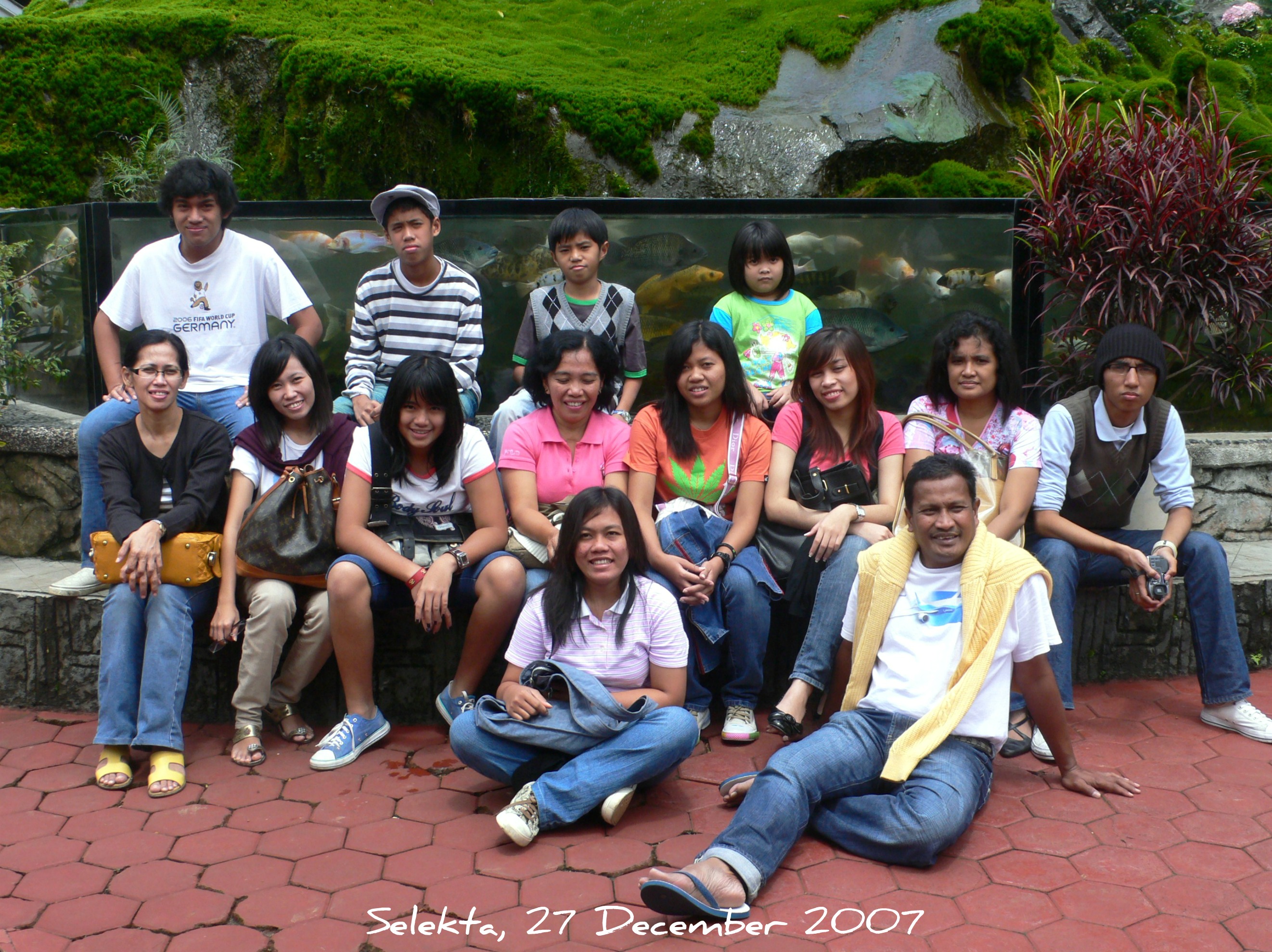
Year End Trip Selekta, Batu, East Java.
Tirtagangga Hot Springs Resort Hotel
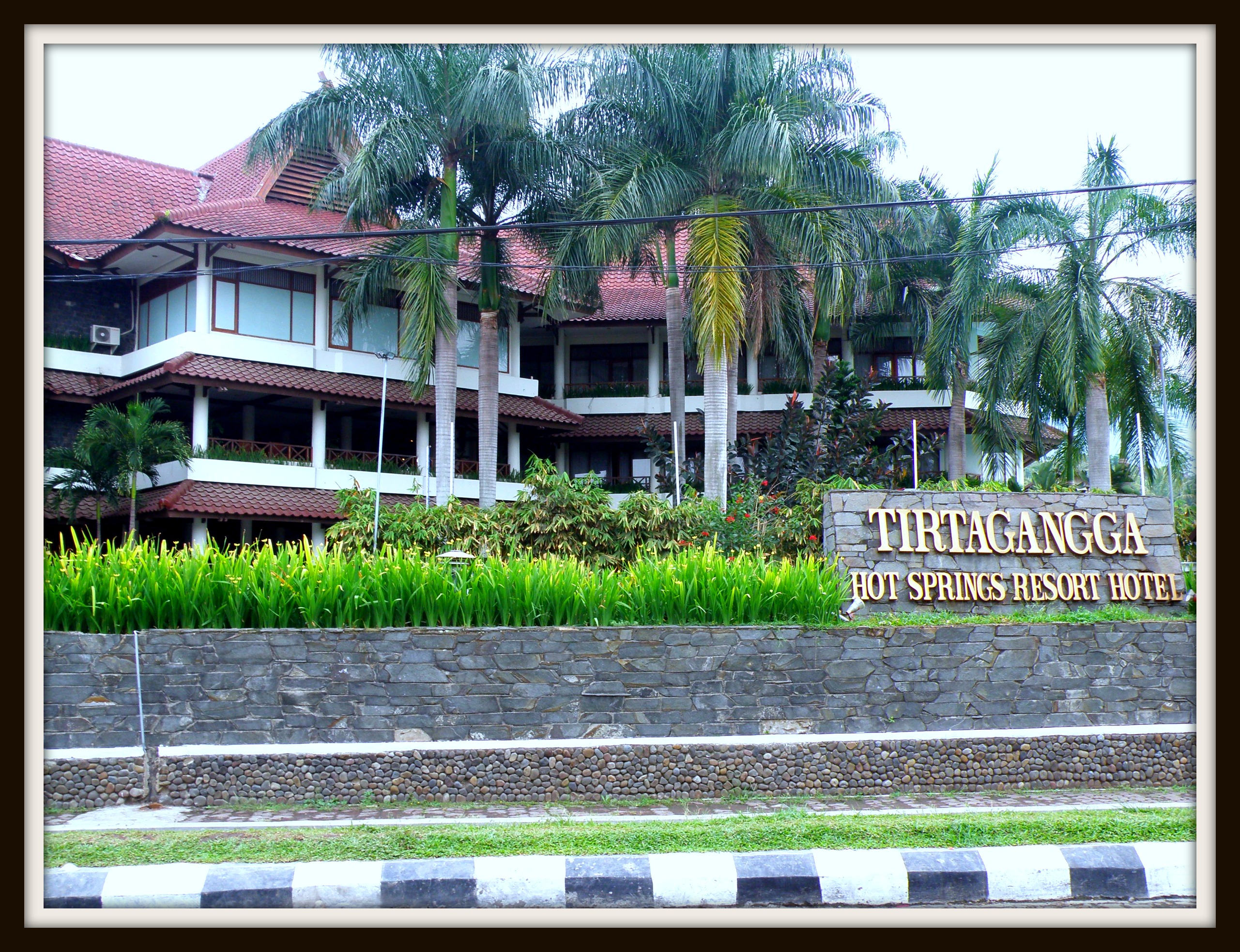
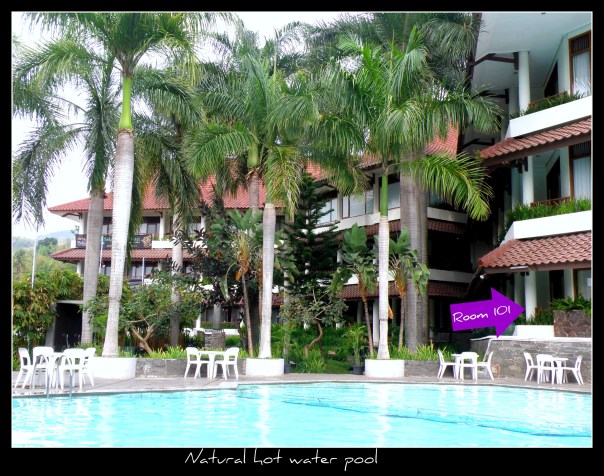
Of the many hotels and lodgings in Cipanas, Garut, Tirtagangga Hot Springs Resort Hotel is our favorite. The Hotel is situated closest to the source of thermal water, so the natural water flowing to the hotel’s pool and baths is much cleaner and warmer.
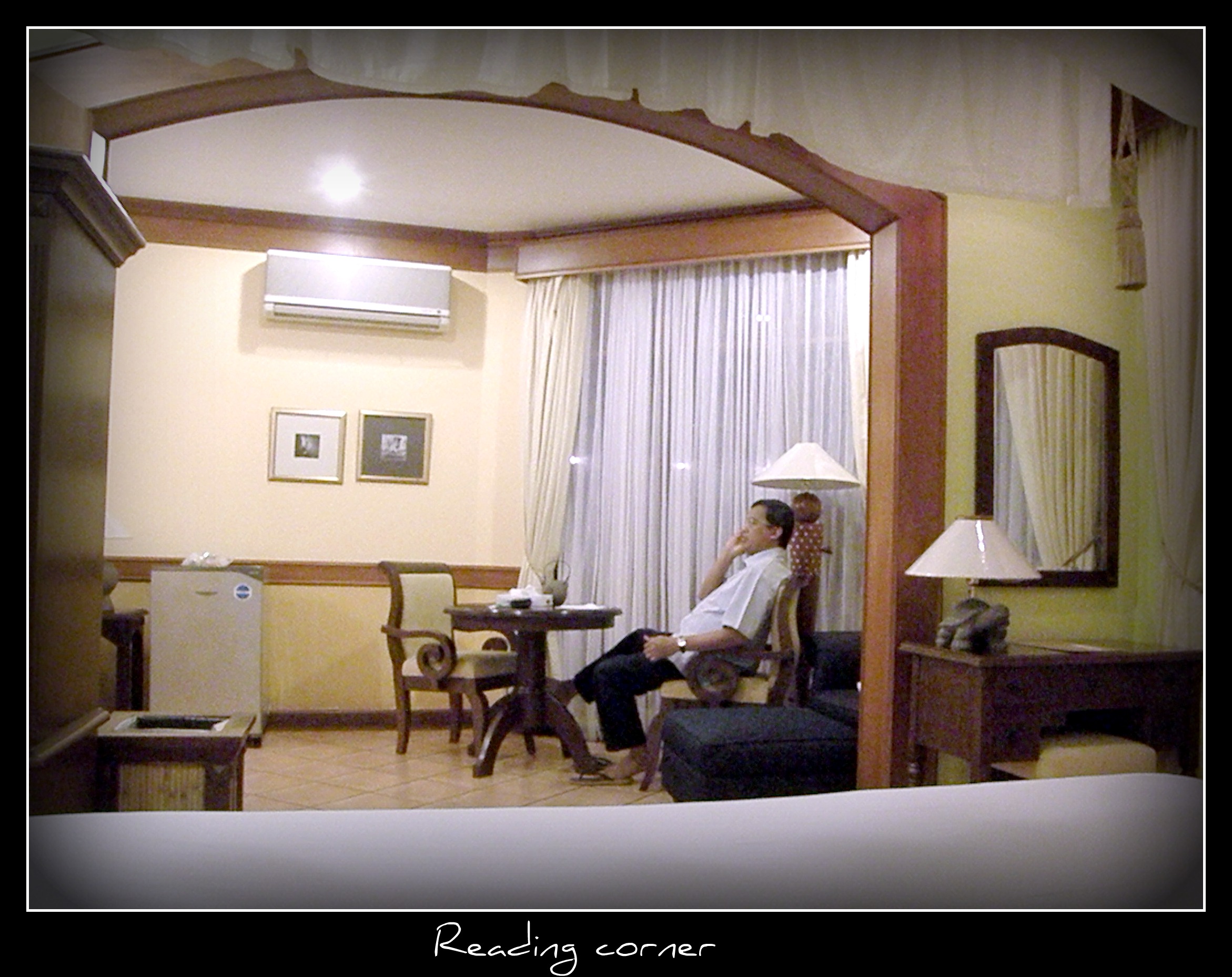
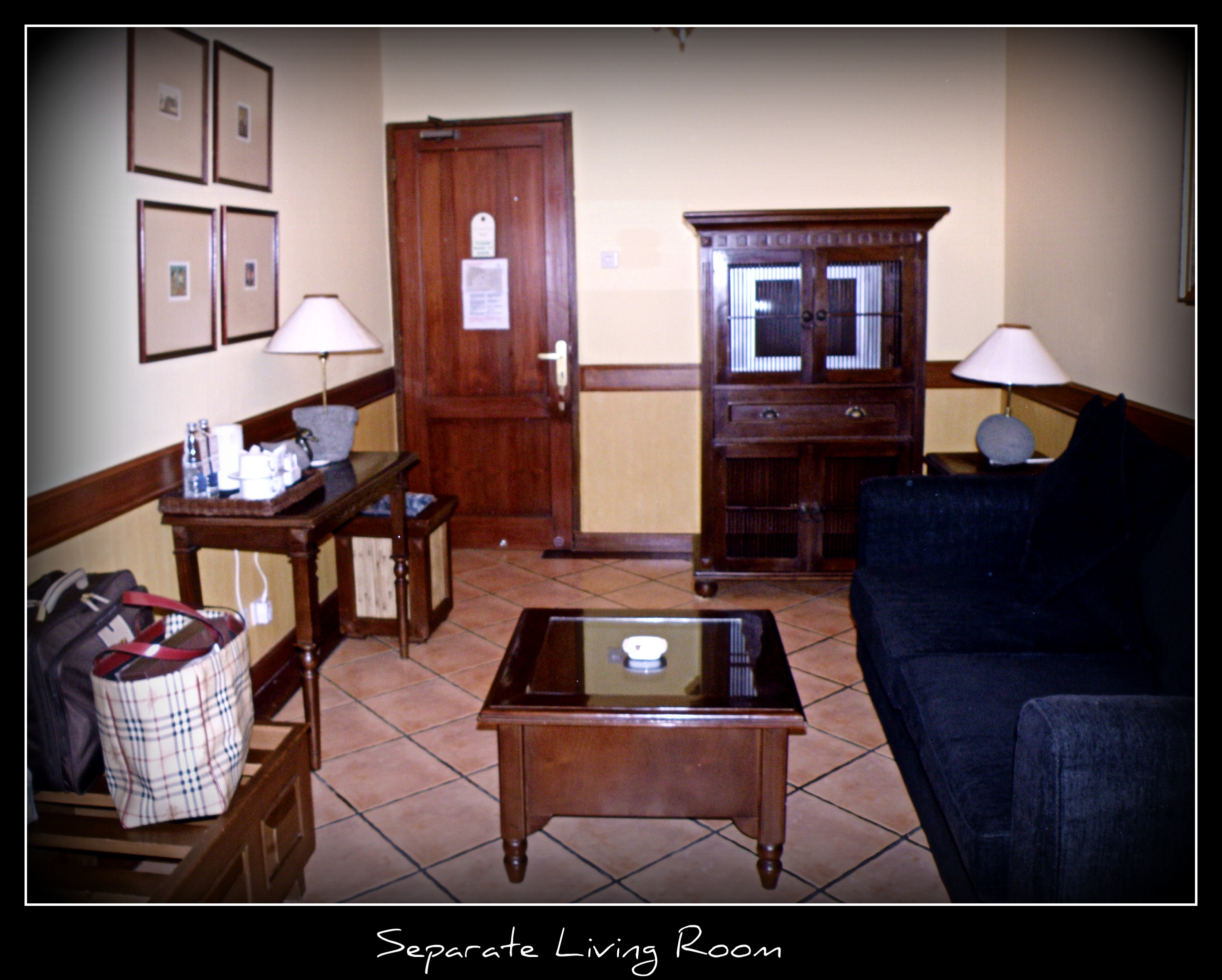
Its rooms are spacious, clean, simple but tastefully furnished.
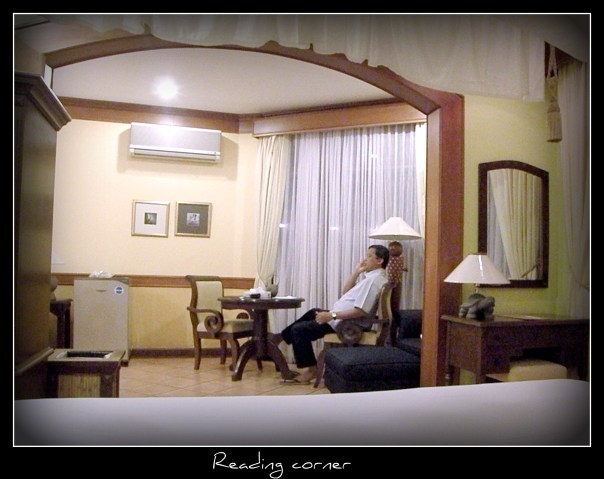
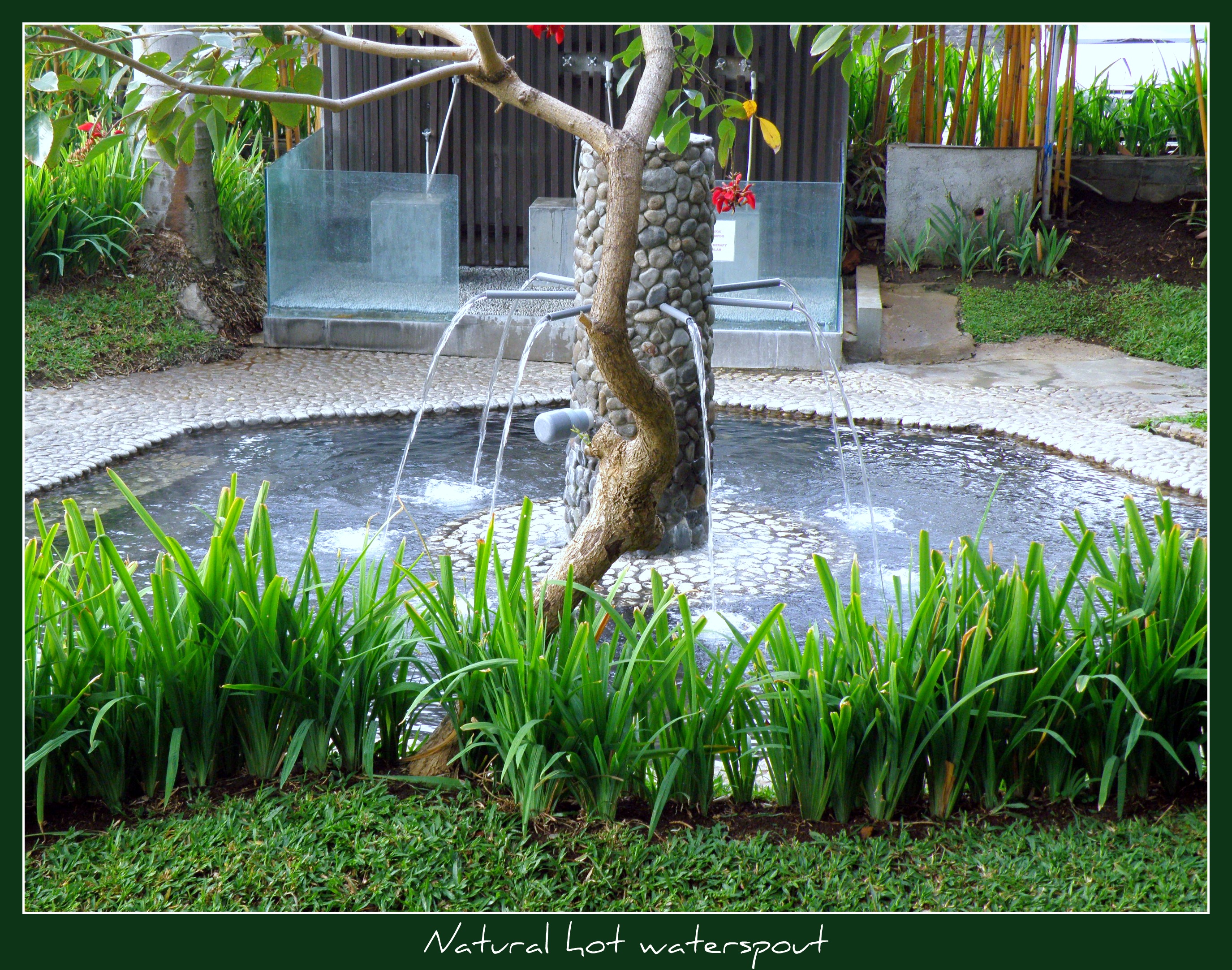
Some of the rooms are even equipped with private natural hot tubs.
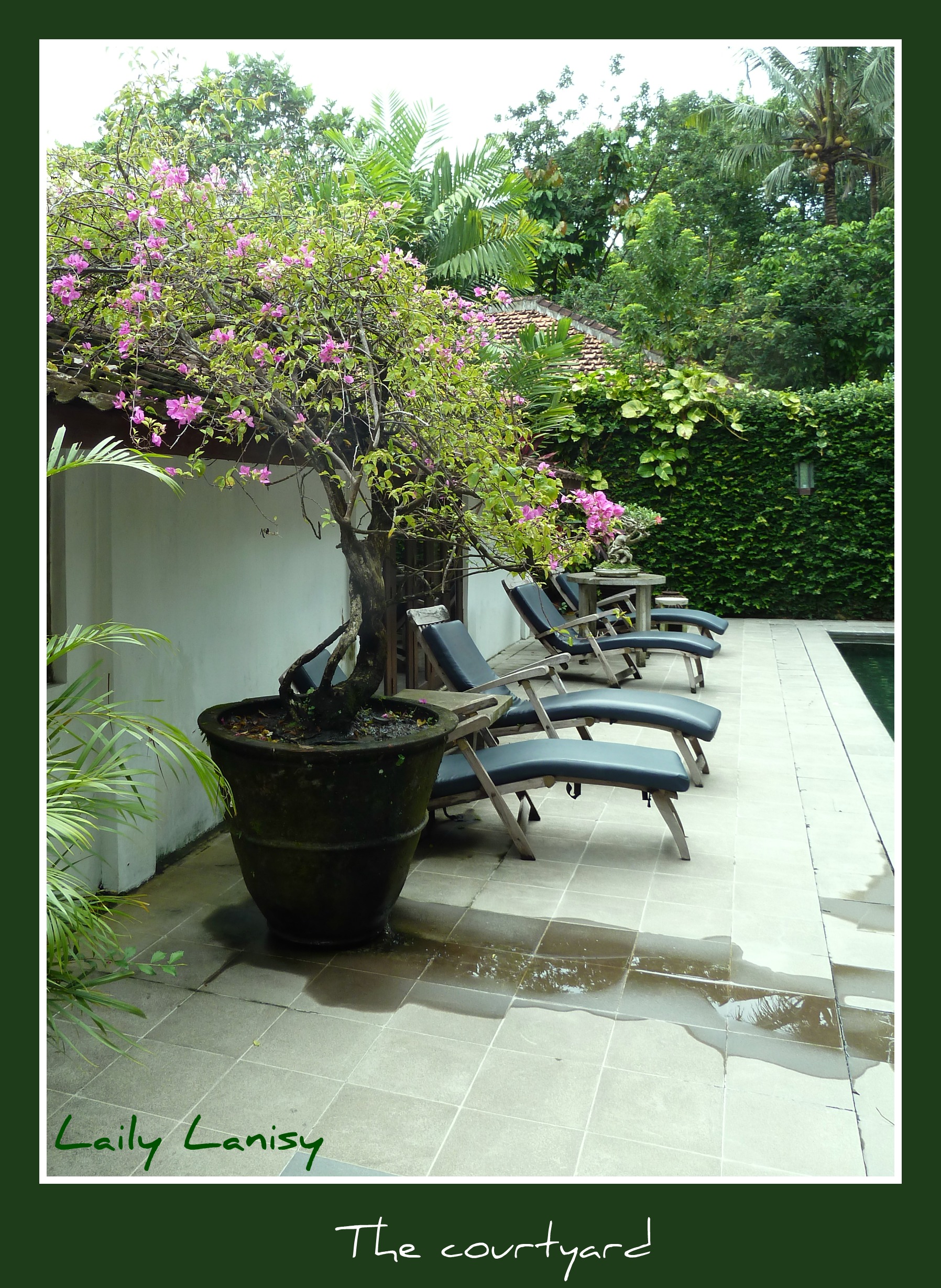
The hot pools and hot fountain in the courtyard is quite open but still respect privacy.
Room 101 was the room that we always stayed when we were there.
Tirtagangga Hot Springs Resort Hotel Jl. Raya Cipanas No 130 Garut – 14451 West Java Telp: +62 262 232549


d’Omah: Makan di Tepi Sawah

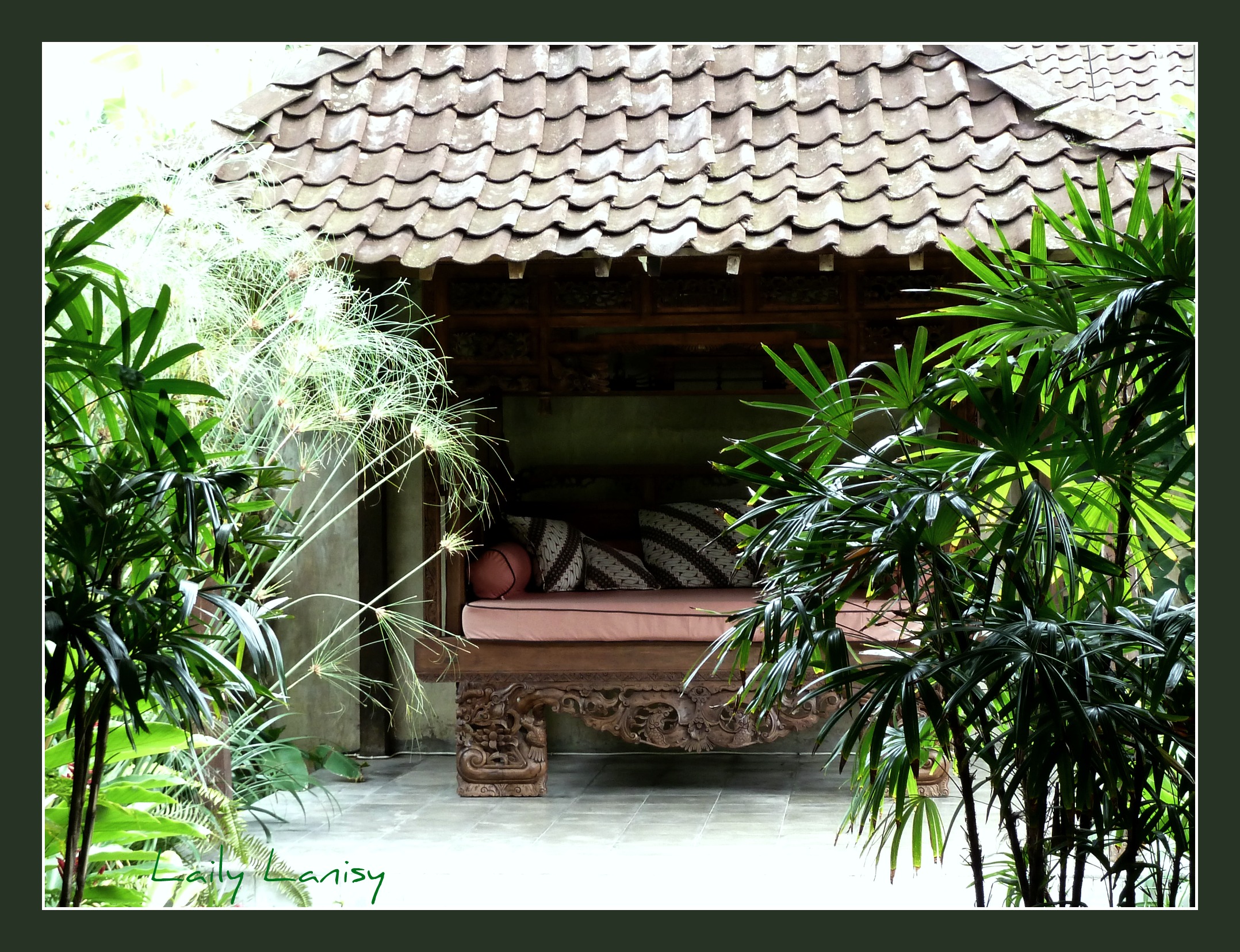
Sebenarnya d’Omah lebih tepat masuk ke kategori hotel dibanding kategori restaurant. Namun, karena saya belum sempat untuk menginap di tempat ini, saya tidak punya pendapat mengenai hotel ini. Beruntung saya diberi kesempatan untuk melihat-lihat fasilitas d’Omah.
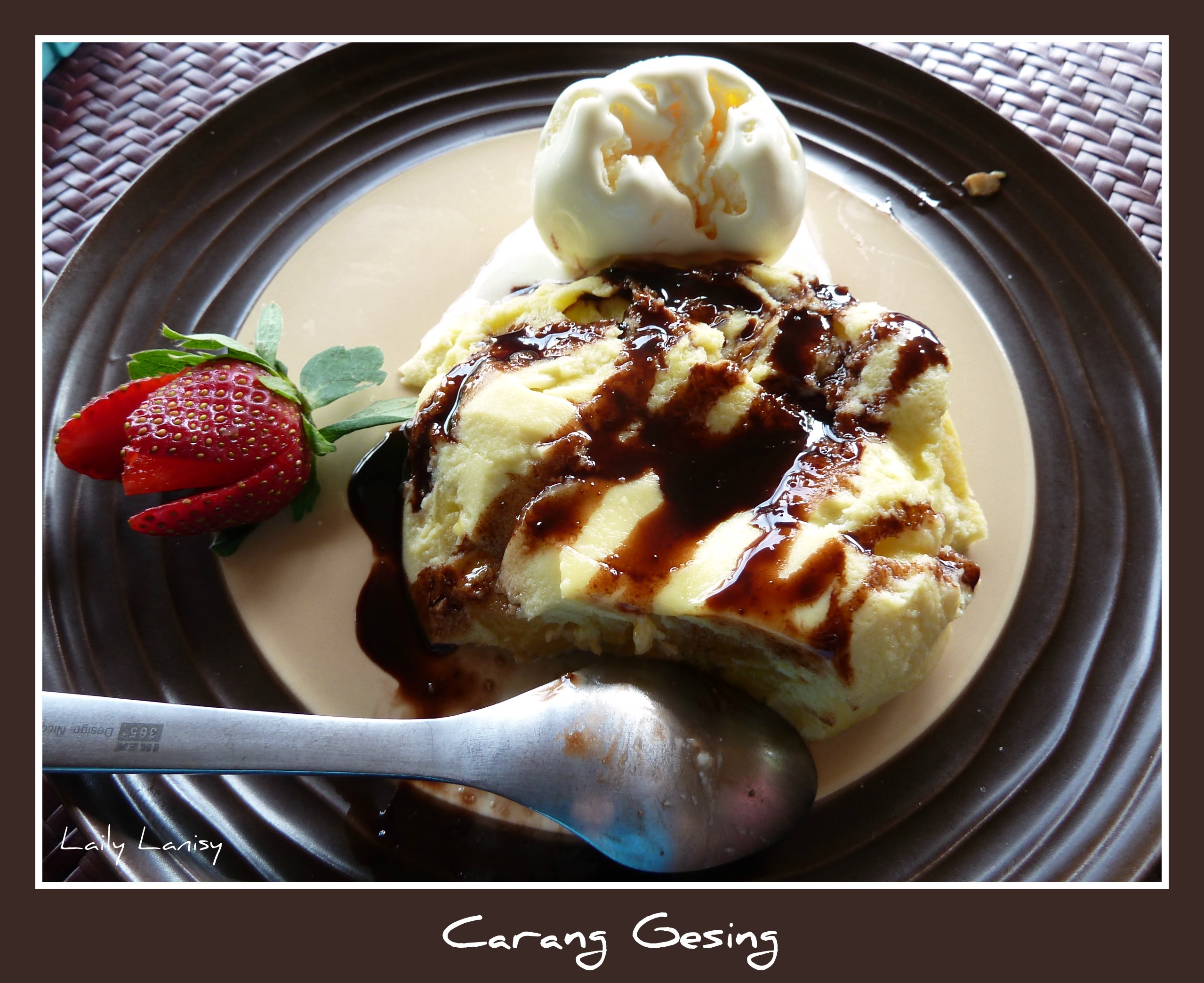
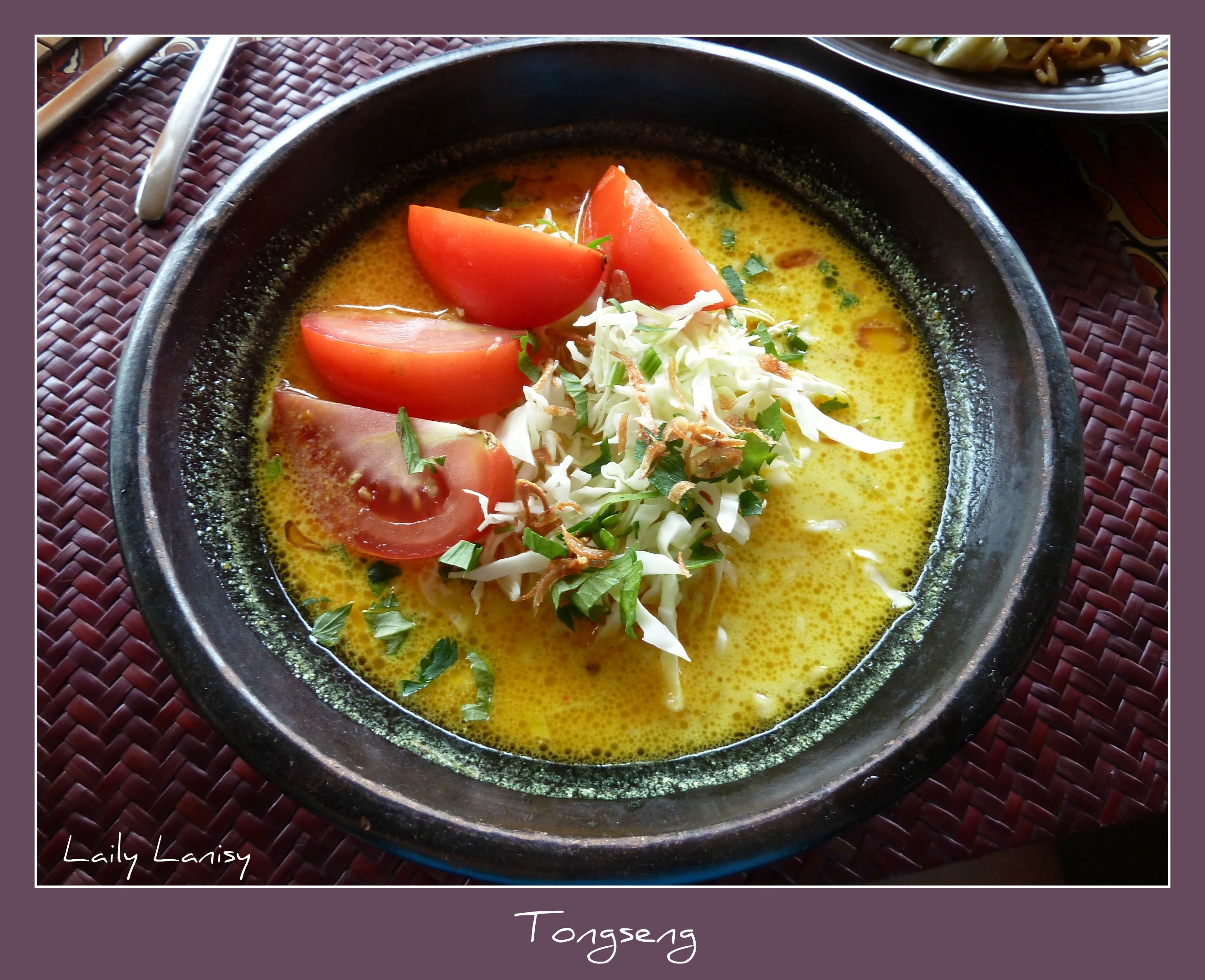
Makan siang di restaurantnya yang berada tepat di depan sawah ini merupakan pengalaman yang menyenangkan. Sayang makanan tradisionalnya sudah disesuaikan dengan selera internasional, jadi untuk lidah saya makanannya jadi enteng. Tongseng yang saya pesan jadi hilang khas tongsengnya. Untuk carang gesing yang dilengkapi dengan vanilla ice cream, OK sekali .
Categories:
Indonesian Food and Hotel
Address:

Ambience:
Javanese Village



The Terrace



-
- The Terrace

“Bunga Teratai” oleh Rukmini

“Bunga Teratai Pakem di Kolam Teratai Kaki Gunung Merapi”
Artist : Rukmini
Material : Acrylic on Canvas
Year : 2003
Size : 80 cm x 120 cm
Collector : Laily Lanisy
Displayed @ Vega Marina Indonesia’s Office

Burung Sejoli
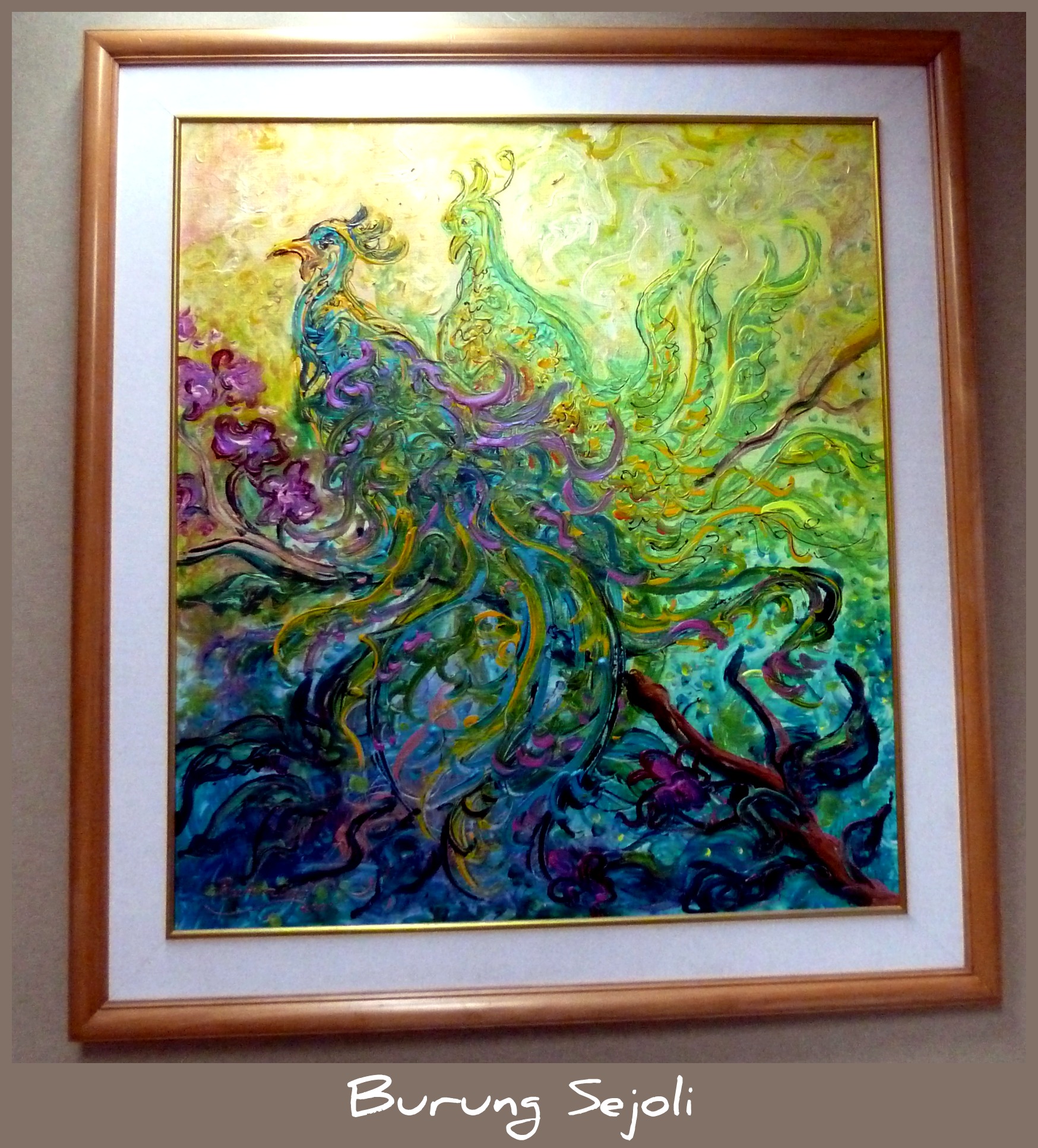
“Burung Sejoli”
Artist : Rukmini
Material : Acrylic on Canvas
Year : 1998
Size : 90 cm x 80 cm
Collector : Laily Lanisy
Displayed @ Vega Marina Indonesia’s Office – Meina’s office

Lan Na Thai: On Jakarta’s Busiest Street
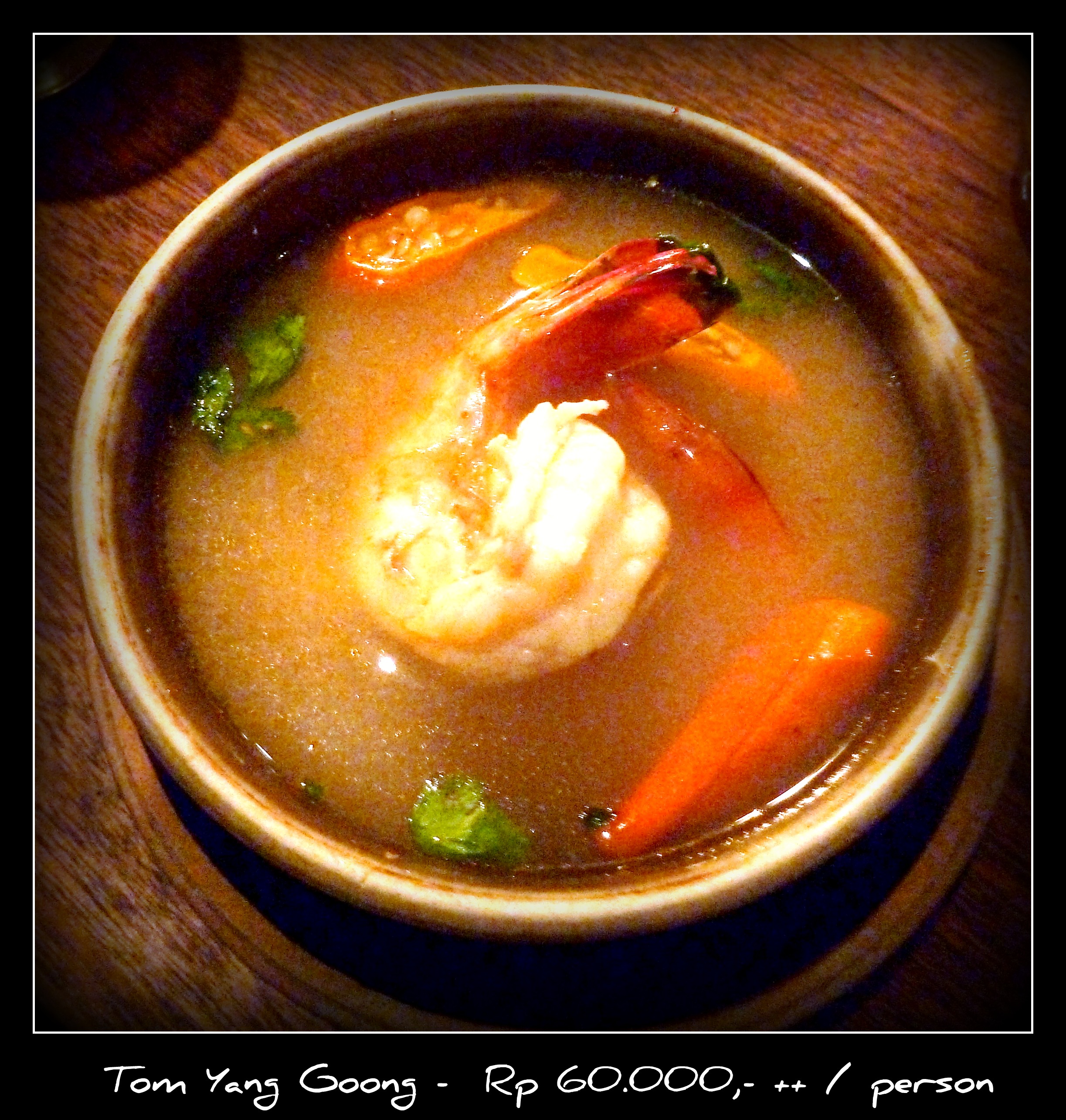
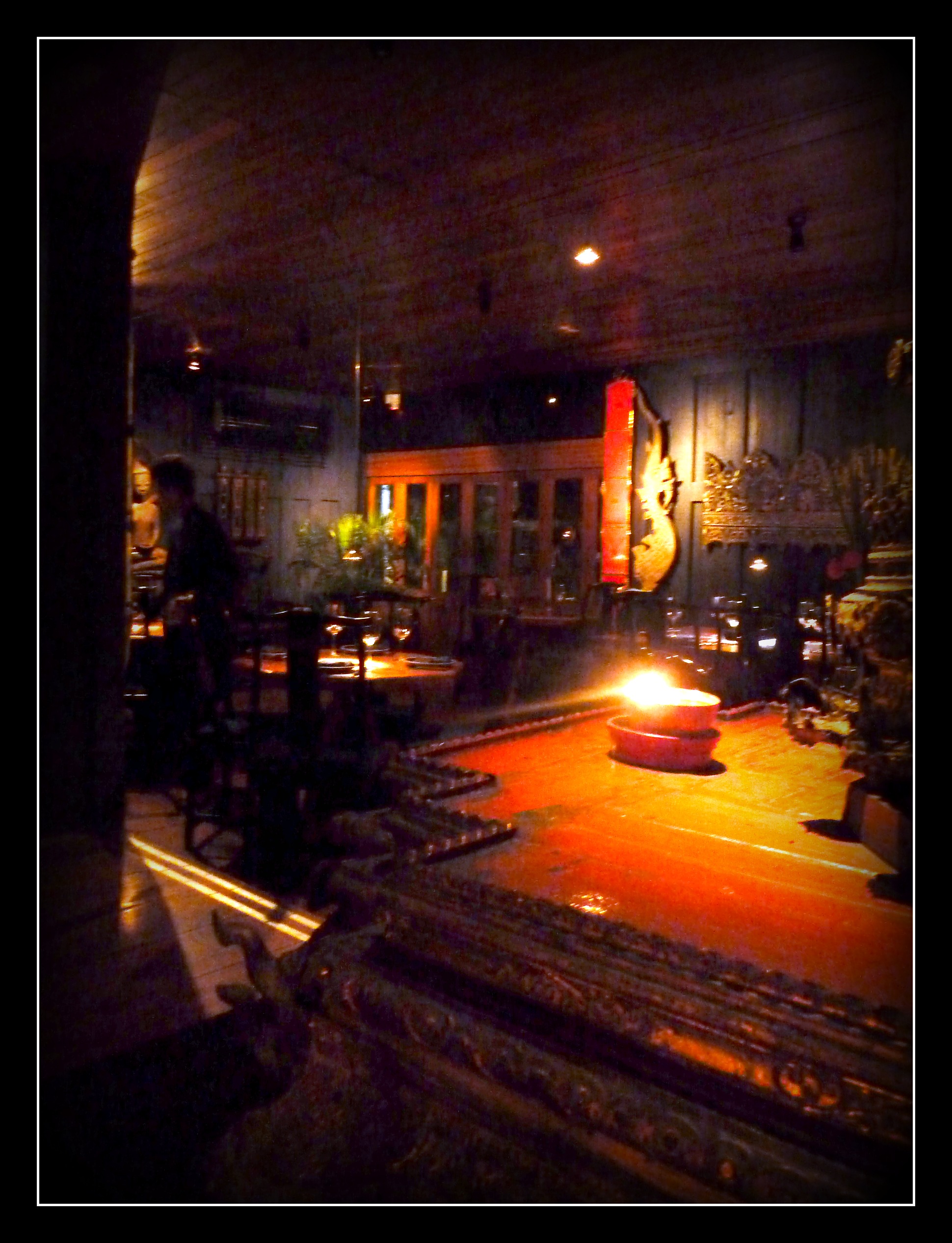
You may have passed this restaurant many times and yet you don’t notice its existence. Occupaying a regular house, without parking lot and on one of the busiest street in Jakarta – behind Mandarin Hotel and German Embassy – you bound to miss this place. Fortunately, the restaurant provides valet parking service. Once you were inside the restaurant, you would be transformed to another world. Classy, Antique and tranquil. Not to mention that the food is excellent.
Categories:
Thai Cuisine
Address:
Jl. DR. Kusuma Atmaja 85
Menteng
Jakarta 10310
Indonesia
Telp: +62 21 3192 5037
Ambience: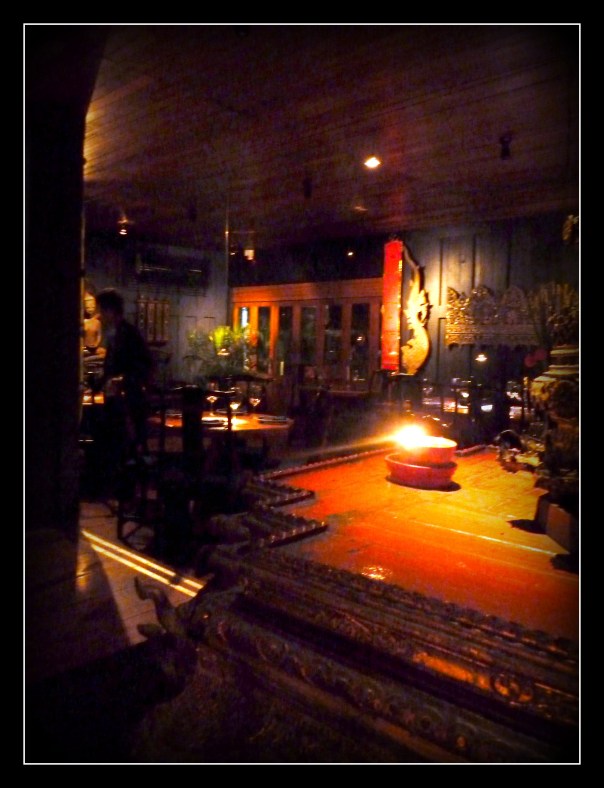
Attire:
Formal
Price Range:
Rp 150.000,- – Rp 300.000,- / person
Date of Visit:
July 31, 2011, dinner with Maga, Junior and Stef
Our Orders and the Prices:

Mango Salad with Fish
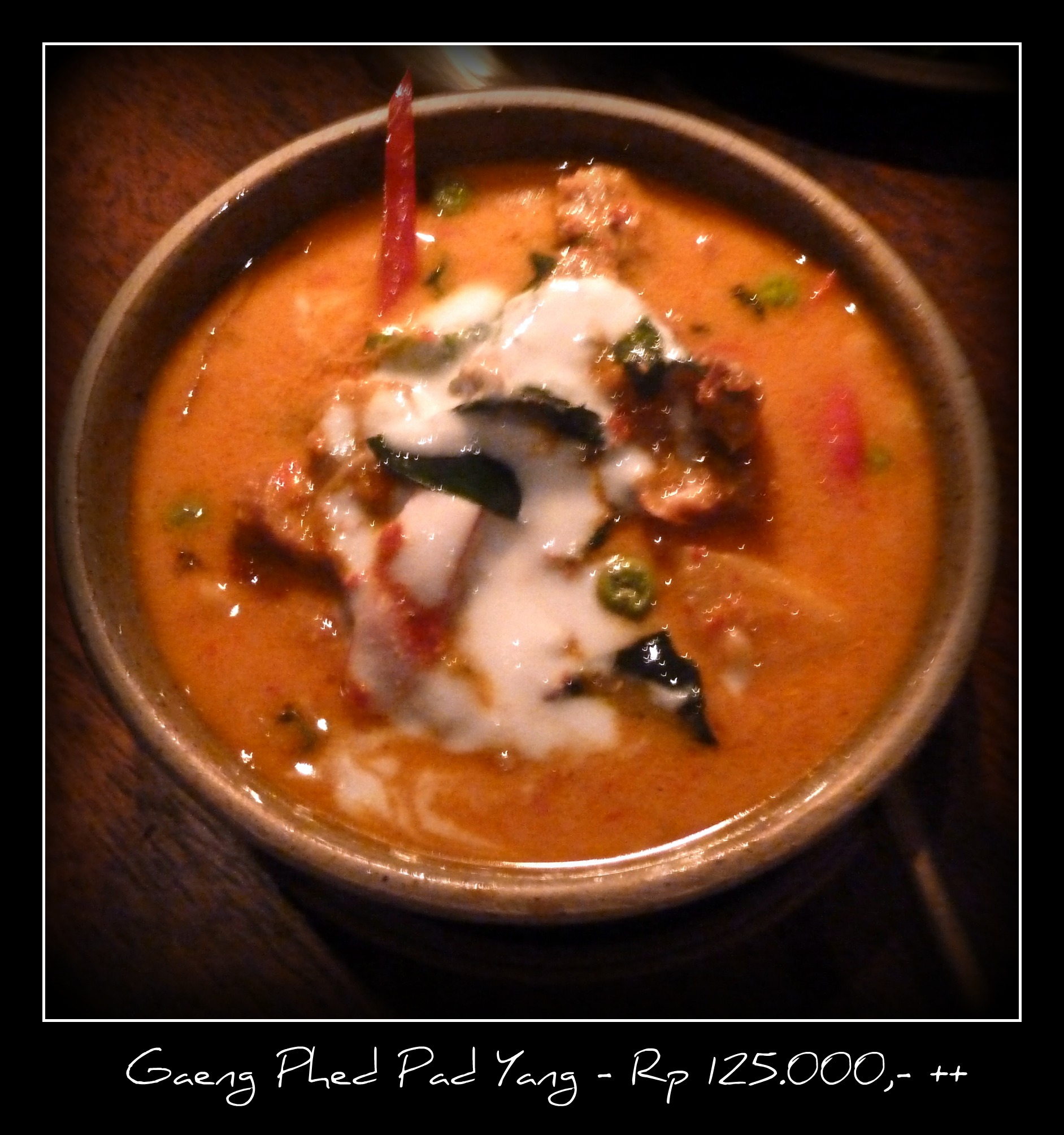
Duck Curry
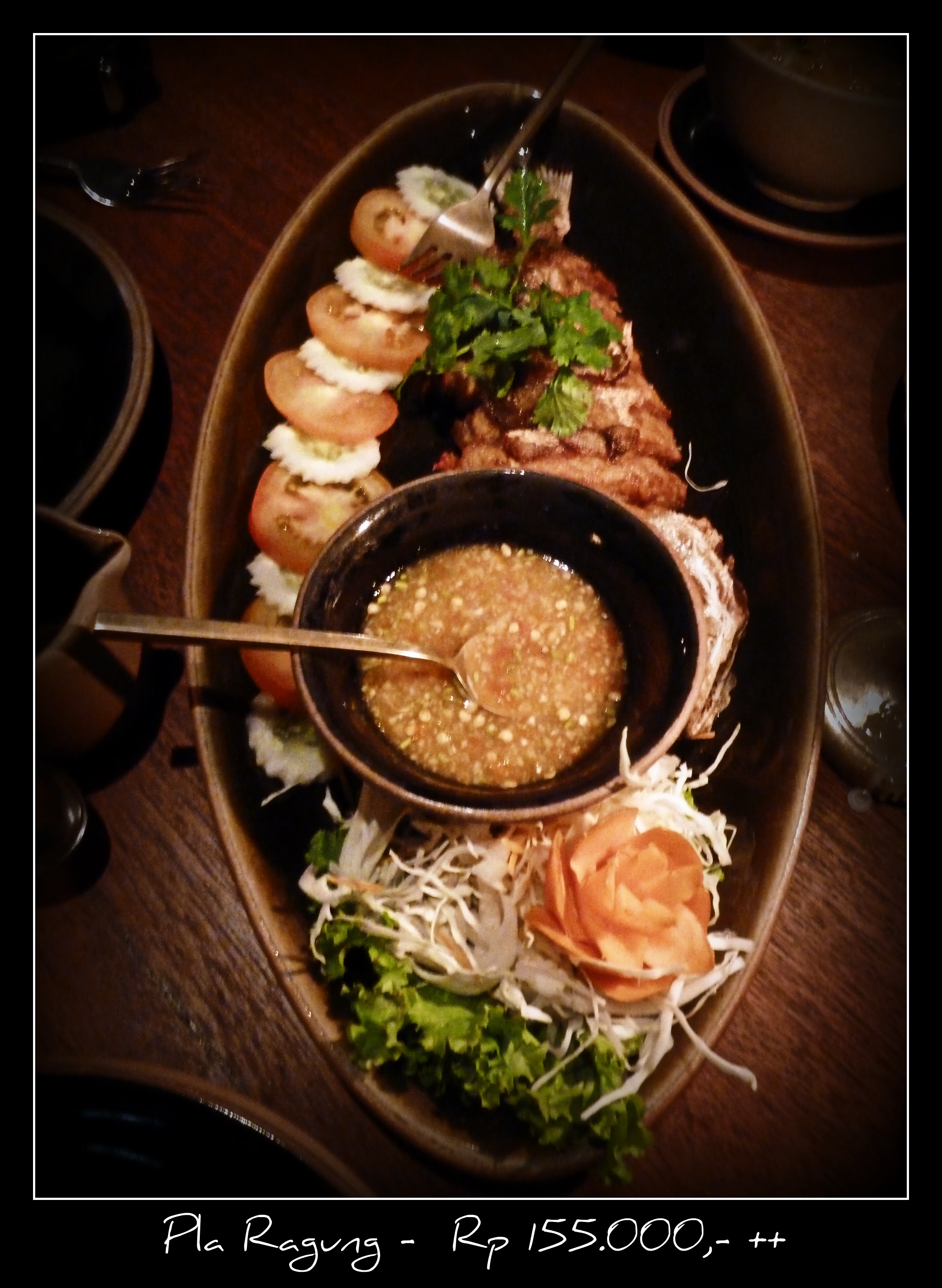
Sea Bass Chiang Mai Style
Fried Rice on Pineapple Rp. 75.000,-
Steamed Rice Rp. 10.000,-
Tom Yang Goong Rp. 60.000,- / bowl
Beef Kailan Rp. 110.000,-
Thai Iced Tea/Coffee Rp. 30.000,-
Bogor Cafe @ Hotel Borobudur
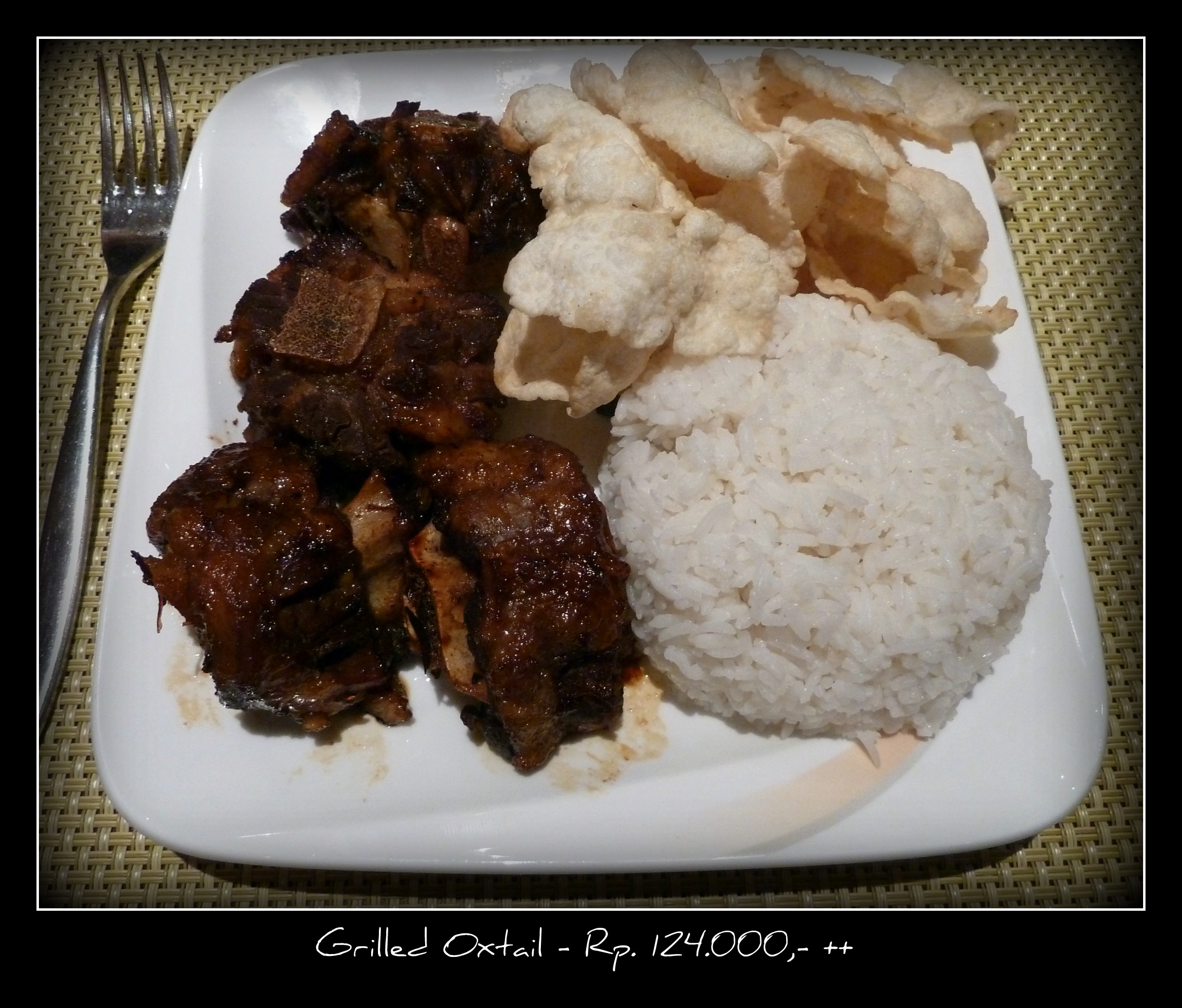
Its legendary “Sop Buntut” – a Javanese style oxtail soup – maybe the best in Jakarta. However, to have to ask for “sambal” and “acar” (chilli sauce and pickles) to the server every time we order oxtail soup that should be served automatically is a little bit annoying. By the way, I vote Handayani’s oxtail soup in Surabaya as the best oxtail soup in Indonesia.
Categories:
Coffee Shop, Loca and International Cuisine
Address:
Hotel Borobudur, Lobby Level
Jl. Lapangan Banteng Selatan
Jakarta
Indonesia
Telp: +62 21 380 5555
Opening Hours:
Opens 24 hours
Ambience:
Typical Hotel’s Coffee Shop
Attire:
Casual
Price Range:
Rp 175.000,- – Rp 200.000,- / person
Date of Visit:
July 30, 2011, Late dinner with Maga after attending NTT cultural night
Our Orders and the Prices:
Sop Buntut Goreng Rp. 118.000,-
Sop Buntut Bakar Rp. 124.000,-
Hot Tea Rp. 35.000,-
Jasmine Tea Rp. 48.000,-
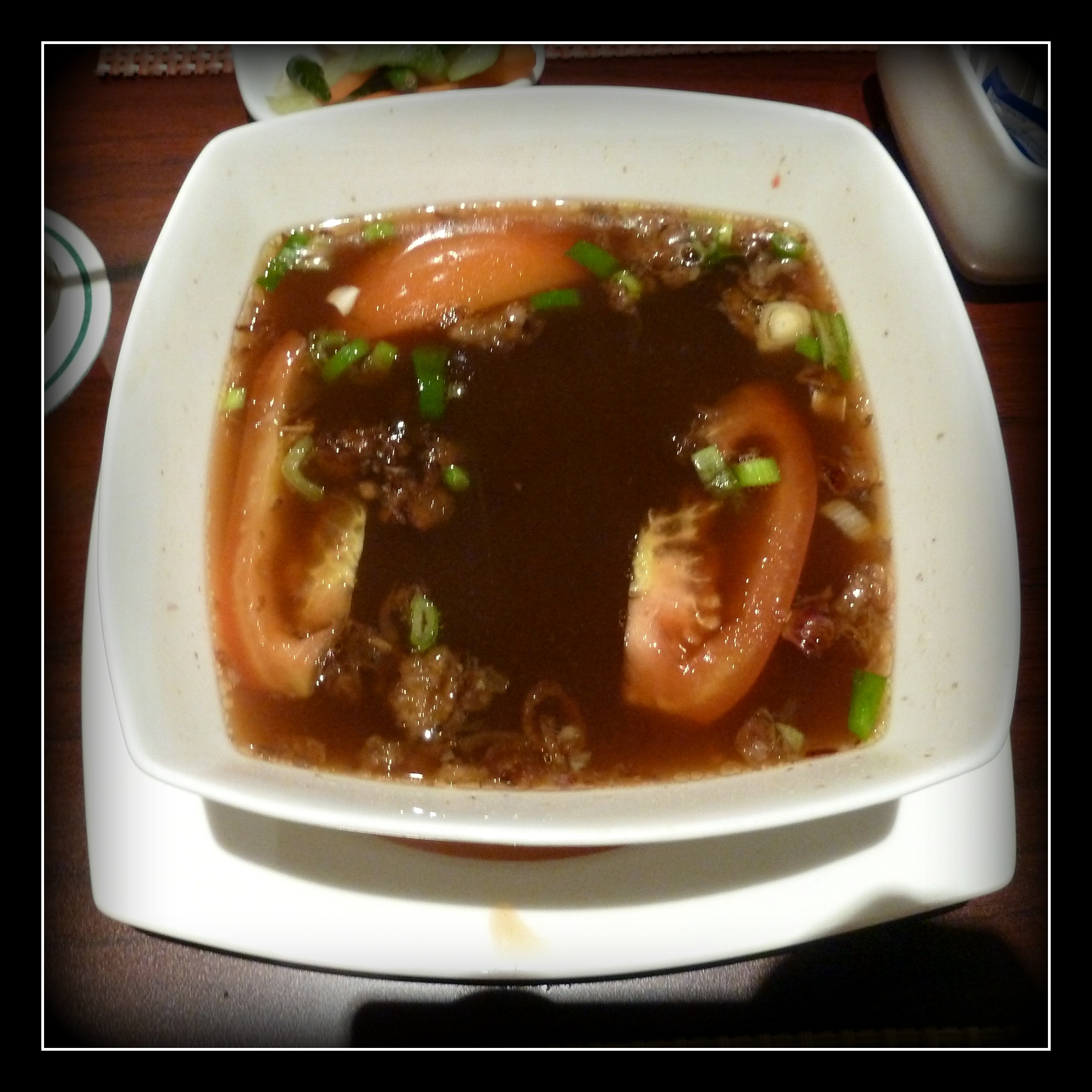
The Soup
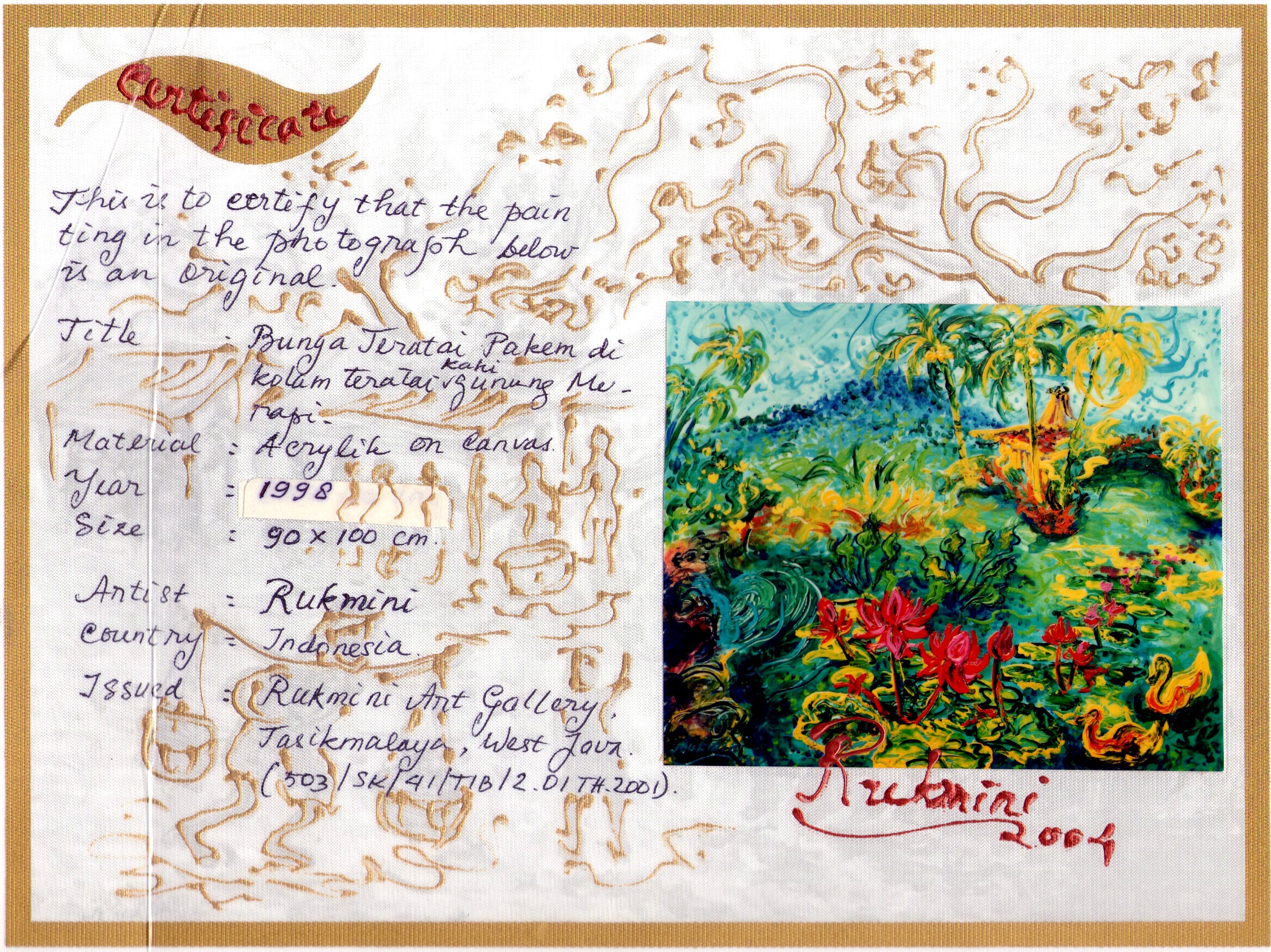
“Bunga Teratai Pakem di Kolam Teratai Kaki Gunung Merapi” oleh Rukmini
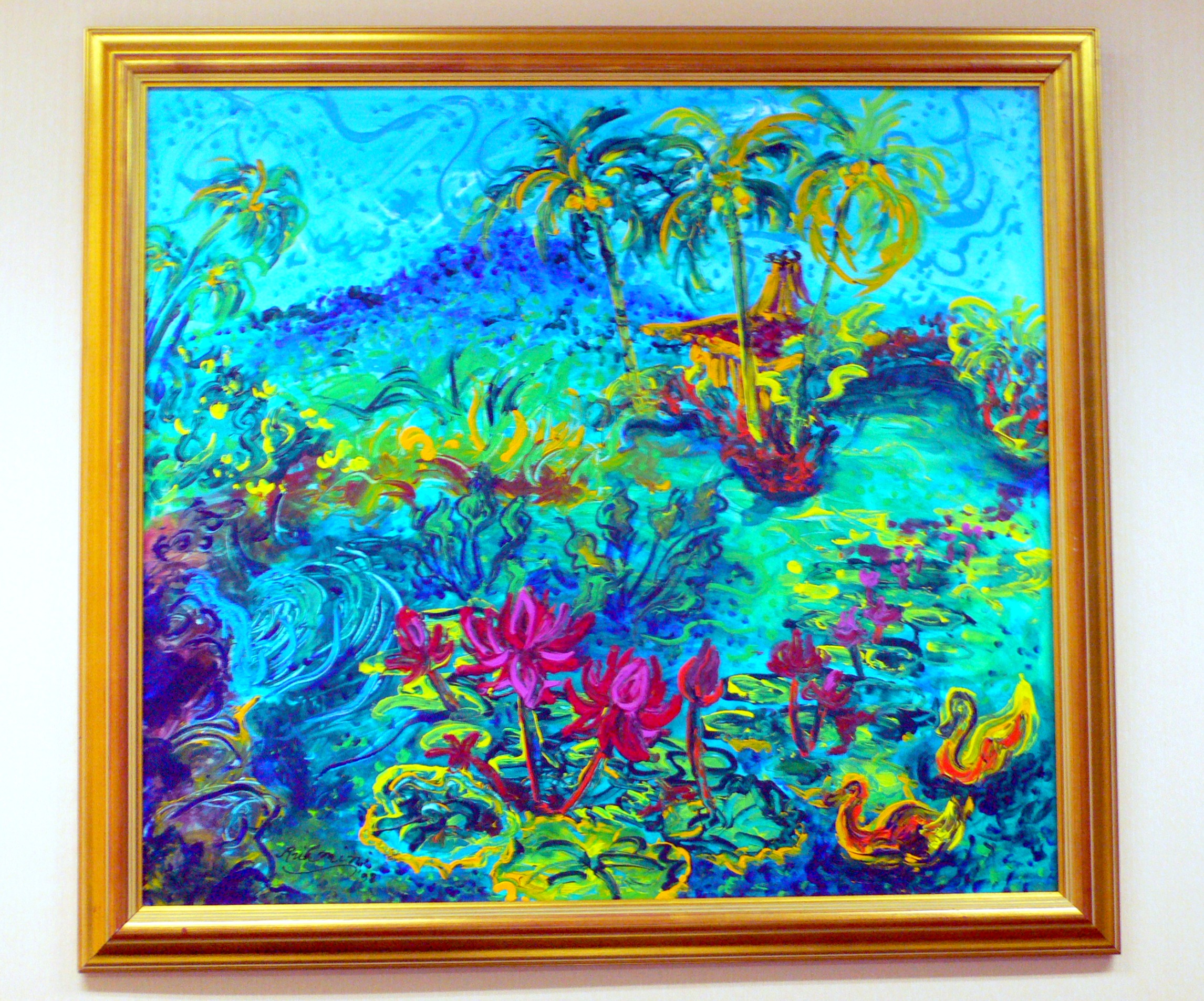
“Bunga Teratai Pakem di Kolam Teratai Kaki Gunung Merapi”
Artist : Rukmini
Material : Acrylic on Canvas
Year : 1998
Size : 90 cm x 100 cm
Collector : Laily Lanisy
Displayed @ Vega Marina Indonesia’s Office
“Kampung Nelayan” oleh Kartika Affandi
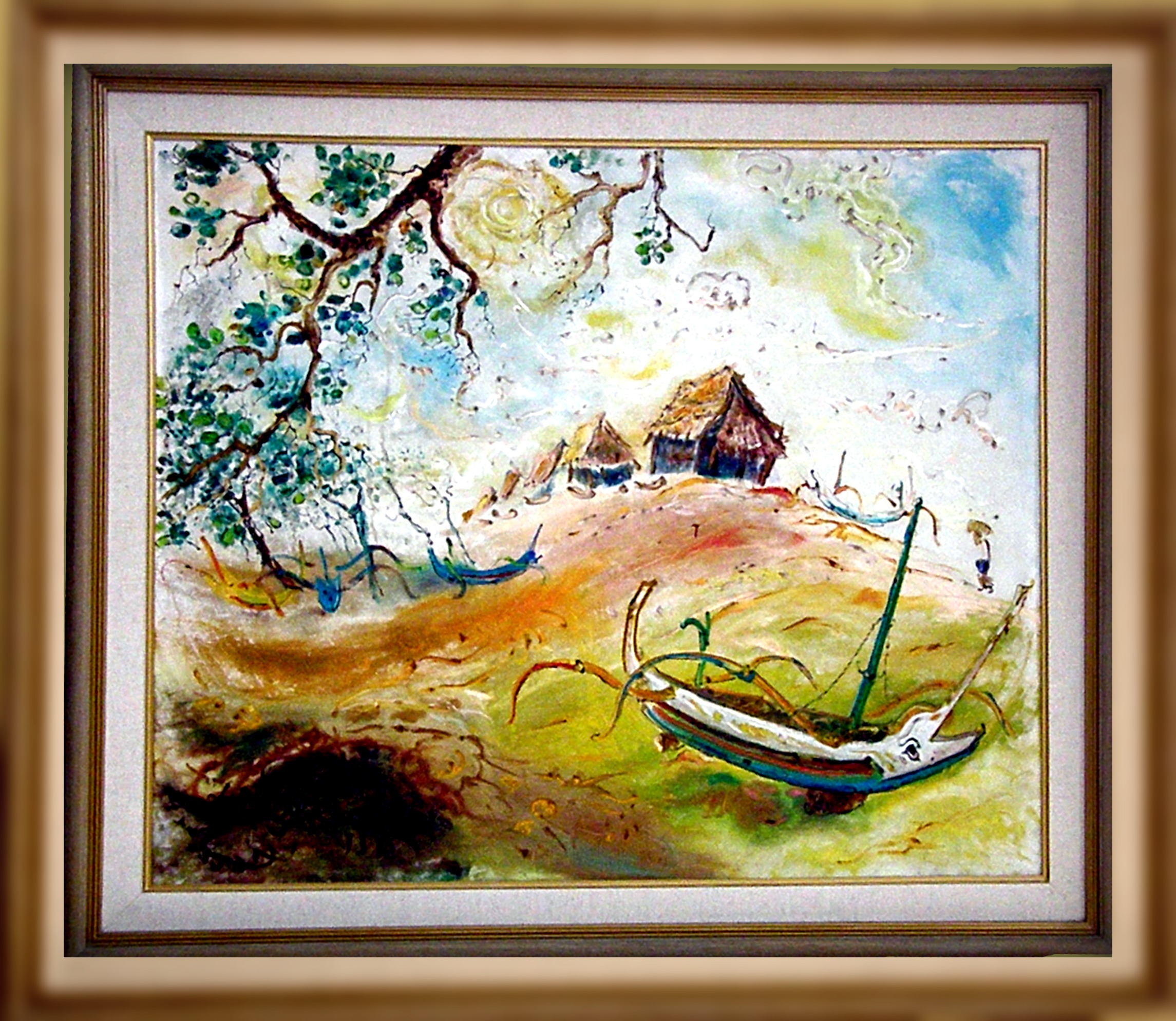
Kartika Affandi. Oil on Canvas. Laily Lanisy's Collection
Kartika Affandi-Koberl
From Wikipedia, the free encyclopedia
Kartika Affandi-Koberl (born November 27, 1934), is an Indonesian artist born into a family of artists
Kartika Affandi – the daughter of Affandi and Maryati, both were painters -was born in Jakarta in 1934. Kartika became engaged to a young Javanese artist, Sapto, at the age of fourteen and when she was seventeen they were married. She bore Sapto eight children.
Kartika never received formal art instruction. From the age of seven, she was instructed by Affandi in how to paint with fingers and tubes directly on the canvas. Any mixing of colours is done on her hands and wrists. Kartika has no permanent studio; like Affandi, she prefers to paint outside in the village environment where she interacts directly with her subjects and on-lookers. This contrasts with most contemporary Indonesian painters, who work in their studios from mind-images, memory, photographs or sketches.
In a modern art world born in 1930s, in which men were still the predominant actors, Kartika is one of a small group of women who from the mid-1980s have succeeded in exhibiting their work on a regular basis and in gaining limited critical recognition. Even in this context, Kartika’s art emerges as unique, ranging as it does from conventional to subversive.
Following in the populist footsteps of Affandi, Kartika also has a long history of painting rural and dispossessed people such as fishermen, farmers, workers and beggars. Since these individuals pose while interacting with her and exchanging life histories as she paints, these must be considered portraits. Although narrative, her paintings when viewed close up dissolve into strong, abstract statements in energetically applied impasto oils. Kartika’s work ranges from the sweet and idyllic to an expressive realism that can be harsh. The latter is evident in her paintings of beggars, handicapped people and suffering animals and in her uncompromising depiction of the progress of old age, whether painting a stranger, her father, or herself.


 thelanisy.com